US State Department's Font Fiasco: A Symbol of Deeper Divide
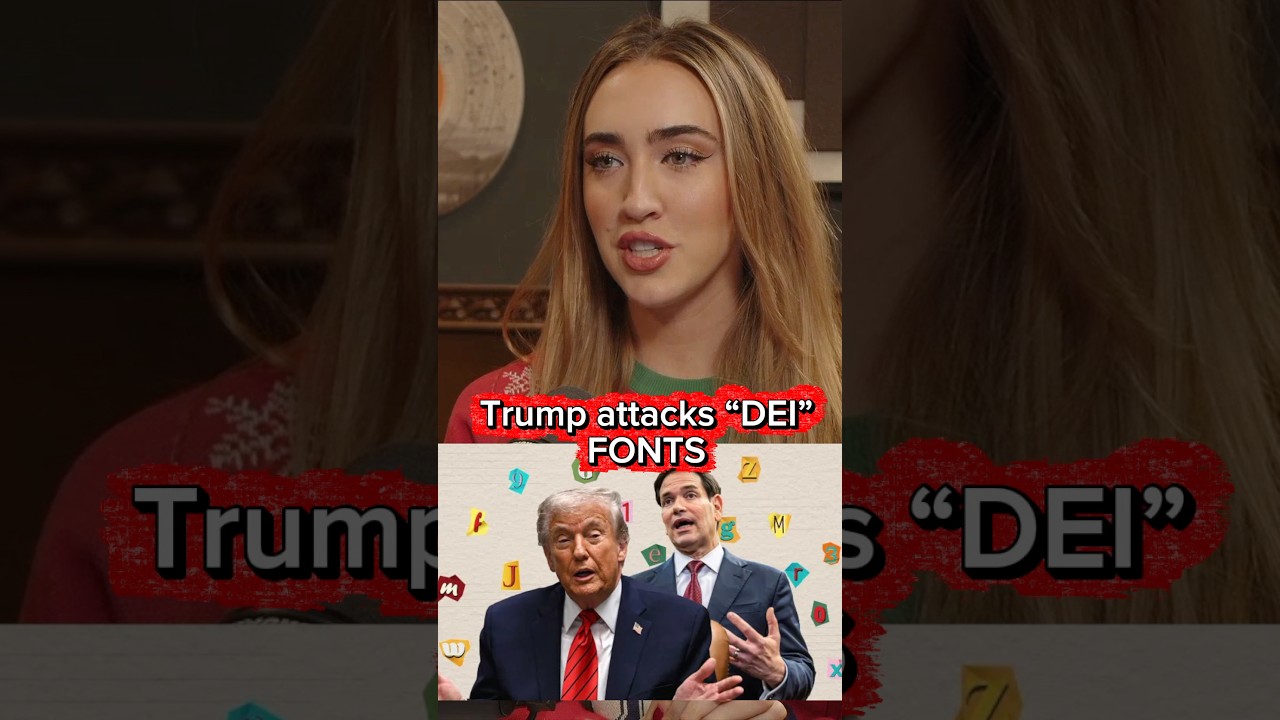
The **US State Department**, under the leadership of **Secretary of State Marco Rubio**, has reverted to using **Times New Roman** as its official font, abandon
Summary
The **US State Department**, under the leadership of **Secretary of State Marco Rubio**, has reverted to using **Times New Roman** as its official font, abandoning the **sans serif typeface** introduced during the **Biden administration**. This move has been met with criticism, with some labeling it as **'wasteful'** and a symbol of the ongoing **'war against woke'**. The decision has sparked a wider debate about government spending, bureaucratic priorities, and the role of aesthetics in official communications. The State Department's font choice has been seen as a reflection of the **partisan divide** in the US, with **Republicans** and **Democrats** holding differing views on the matter. For more information on the **US State Department**, visit [[us-state-department|US State Department]]. The **Biden administration**'s efforts to modernize the government's visual identity can be explored further at [[biden-administration|Biden Administration]].
Key Takeaways
- The US State Department has switched back to using Times New Roman as its official font
- The decision was made by Secretary of State Marco Rubio
- The sans serif typeface was introduced during the Biden administration
- The font switch has sparked a debate about government spending and bureaucratic priorities
- The decision reflects the partisan divide in the US and the priorities of the current administration
Balanced Perspective
The State Department's font choice is a **matter of personal preference**, and the debate surrounding it may be **overblown**. The **cost of rebranding** is likely to be a **small fraction** of the department's overall budget, and the impact on the public's perception of the government may be **limited**. It is essential to consider the **broader context** of government spending and priorities when evaluating the significance of this decision. The **US government's budget allocation** can be explored further at [[us-government-budget-allocation|US Government Budget Allocation]].
Optimistic View
The switch back to **Times New Roman** can be seen as a **pragmatic decision**, acknowledging the familiarity and readability of the classic font. This move may also be viewed as a **cost-saving measure**, as it eliminates the need for further investment in a new visual identity. **Secretary of State Marco Rubio**'s decision can be seen as a **bold move** to prioritize efficiency and tradition. For more information on **Marco Rubio**, visit [[marco-rubio|Marco Rubio]]. The **US State Department's** efforts to streamline its communications can be explored further at [[us-state-department-communications|US State Department Communications]].
Critical View
The reversion to **Times New Roman** can be seen as a **step backward**, abandoning a more **modern and inclusive** visual identity. This decision may be perceived as a **symbol of the 'war against woke'**, prioritizing **partisan ideology** over **good design** and **effective communication**. The **State Department's** font choice may be viewed as a **missed opportunity** to promote a more **progressive and forward-thinking** image. For more information on the **'war against woke'**, visit [[war-against-woke|War Against Woke]]. The **US State Department's** efforts to promote diversity and inclusion can be explored further at [[us-state-department-diversity-inclusion|US State Department Diversity and Inclusion]].
Source
Originally reported by The New York Times